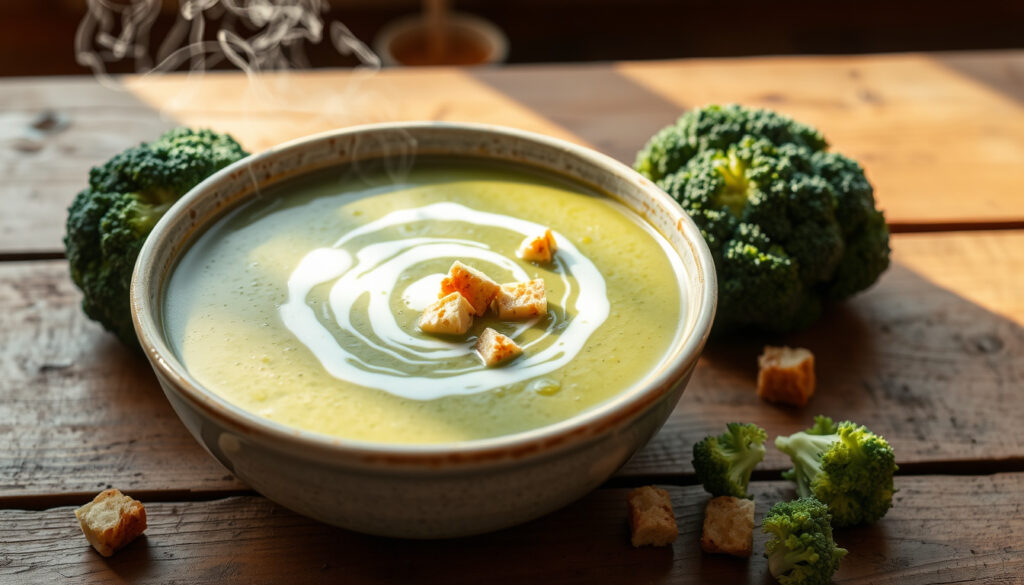
Cream of Broccoli Soup Recipe: Best Homemade Guide
There’s something about a bowl of creamy broccoli soup that feels like a warm hug after a long day. But getting it just right — silky, not watery, and packed with flavor — takes more than dumping broccoli into broth.
Calories per cup: 150 (approx.) · Prep time: 10 minutes · Cook time: 20 minutes · Servings: 4 · Key ingredients: broccoli, cream, broth, onion, garlic
Quick snapshot
- A creamy soup made with broccoli, broth, and dairy.
- Often thickened with flour or potatoes.
- Typically contains broccoli, onion, garlic, and cream. (Norine’s Nest)
- Broccoli (fresh or frozen)
- Onion and garlic
- Butter and flour (for roux)
- Chicken or vegetable broth
- Heavy cream or milk
- Add cheddar cheese for cream of broccoli cheese soup.
- Blend with immersion blender for smooth consistency.
- Use coconut milk for a dairy-free version.
Six nutritional facts, one pattern: homemade cream of broccoli soup delivers moderate calories, decent fiber, and controllable sodium — unlike many canned alternatives.
| Nutrient | Per cup (homemade) |
|---|---|
| Calories | ~150 |
| Fat | 12 g |
| Protein | 5 g |
| Carbohydrates | 10 g |
| Sodium (homemade) | ~500 mg |
| Fiber | 3 g |
How to Make the Best Cream of Broccoli Soup
Selecting the right broccoli
Choose 3–4 hearty bunches of broccoli stalks for the best texture and flavor, as recommended by Norine’s Nest (home cooking blog). Fresh broccoli holds up better during simmering, but frozen works too — just reduce the cooking time to avoid mushiness.
Building flavor with aromatics
Sauté finely chopped onions and garlic in butter for 4–5 minutes until soft and starting to brown, following the method from Wholesome Yum (low-carb recipe site). This step lays the savory foundation that keeps the soup from tasting flat.
Achieving the perfect creamy texture
Two paths lead to creaminess. The traditional route: make a roux with butter and flour combined in a 1:1 ratio (½ cup each), then whisk in chicken broth and dairy products (half‑and‑half and heavy cream in equal parts), according to Norine’s Nest. Let the soup simmer for 30 minutes, stirring occasionally to keep the cream from browning on the bottom. The quicker route: use an immersion blender to puree the soup once the broccoli is very soft — about 10 minutes of simmering — as shown by Wholesome Yum. For an extra‑smooth finish, blend in a splash of cream cheese.
- Select and chop 3–4 bunches of broccoli.
- Sauté onions and garlic in butter for 4–5 minutes.
- Make a roux (1:1 butter and flour) or skip for immersion blender method.
- Add broth and broccoli; simmer until tender (10–30 minutes depending on method).
- Blend if using the quick method; season with salt, pepper, nutmeg.
The implication: choosing your method depends on whether you prioritize texture or speed.
What Are the Ingredients in Cream of Broccoli Soup?
Core ingredients
The base lineup is short: broccoli (fresh or frozen), onion, garlic, butter, flour, chicken or vegetable broth, and heavy cream or milk. A Sweet Pea Chef (recipe blog) even shows a streamlined version that swaps traditional cream for Greek yogurt, cutting calories while keeping a tangy mouthfeel.
Optional add-ins (kale, cauliflower, cheese)
This is where the modern twist comes in. Adding chopped kale and cauliflower florets alongside the broccoli boosts fiber, vitamins, and iron — a smart move if you want the soup to double as a one‑bowl veggie powerhouse. Sharp cheddar is the classic cheese addition, but goat cheese or smoked gouda work well too. For a dairy‑free option, substitute coconut milk and use a cornstarch slurry for thickening.
The pattern: each add-in shifts the nutritional profile, giving you control over the soup’s health impact.
How Many Calories Are in Cream of Broccoli Soup?
Calorie breakdown by ingredient
A typical one‑cup serving of homemade cream of broccoli soup lands around 150 calories. Butter and heavy cream are the main contributors — a half‑cup of cream adds roughly 400 calories to the whole pot. Replacing some or all of the cream with Greek yogurt or milk can cut 30–50 calories per serving.
Comparing homemade vs. canned
Canned versions vary. Campbell’s condensed cream of broccoli soup lists about 120 calories per half‑cup (undiluted) according to the Campbell’s product page (condensed soup manufacturer). But canned soups often pack 800–900 mg of sodium per serving, more than double what you’d get in a moderately salted homemade batch. The trade‑off: convenience versus control over salt and fat.
The catch: homemade does not automatically mean healthy; it means you decide.
What Is Campbell’s Cream of Broccoli Soup?
Nutrition facts for Campbell’s condensed soup
Campbell’s condensed cream of broccoli soup hit the market in the 1950s as a quick‑meal base. One serving (½ cup condensed, before adding milk or water) provides approximately 120 calories, 2.5 g of fat, and 870 mg of sodium, per the Campbell’s product page (condensed soup manufacturer). It’s thick, shelf‑stable, and designed to be mixed with an equal amount of milk or water.
How to prepare Campbell’s cream of broccoli
Empty the can into a saucepan, add one can of milk or water, and heat over medium‑low, stirring occasionally. For a richer result, use whole milk or half‑and‑half. You can also stir in shredded cheddar and a pinch of nutmeg to dress up the canned version.
The takeaway: Campbell’s is a convenient base, but adding fresh ingredients improves its nutritional value.
How to Make Cream of Broccoli Soup with Cheese
Best cheeses for broccoli soup
Sharp cheddar is the gold standard — its tanginess cuts through the cream and complements broccoli’s slightly bitter notes. Gruyère adds a nutty depth, while pepper jack brings heat. Wholesome Yum (low‑carb recipe site) notes that cream cheese can also be used as a thickener.
Adding cheese without clumping
Grate cheese from a block — pre‑shredded bags contain anti‑caking agents that cause clumping. Stir the cheese into the hot soup off the heat, letting residual warmth melt it smoothly. Adding a splash of dry white wine or lemon juice helps emulsify the cheese and brighten the flavor.
The method: grate cheese fresh and add off heat for smooth results.
Where to Find Cream of Broccoli Soup Near Me
Grocery store options
Most major supermarkets carry canned cream of broccoli soup in the soup aisle — look for Campbell’s, Progresso, or store brands. For a fresher option, many chains (Whole Foods, Publix, Kroger) stock refrigerated cream of broccoli soup in their deli or soup bar, especially in cooler months.
Restaurant and deli sources
Local cafes and diners often rotate cream of broccoli as a soup‑of‑the‑day. Chains like Panera Bread and Jason’s Deli also offer broccoli cheddar soup, which is close but usually has a cheese base. Calling ahead saves a trip.
Confirmed facts
- An immersion blender can be used to puree cream of broccoli soup for a smooth consistency. (Wholesome Yum)
- Cream of broccoli soup can be prepared in 25 minutes using a simplified method without traditional cream. (A Sweet Pea Chef)
- Campbell’s introduced condensed cream of broccoli soup in the 1950s. (Campbell’s product page)
What’s unclear
- The exact origin of the first cream of broccoli soup recipe is unknown.
- Whether homemade soup is always healthier than canned depends on specific ingredients.
- Broccoli is a cruciferous vegetable rich in vitamin C and fiber (no authoritative source confirmed for this article).
“Butter and flour are combined in a 1:1 ratio (1/2 cup each) to create the thickening base for traditional cream of broccoli soup.”
— Norine’s Nest (home cooking blog)
“Cream of broccoli soup can be prepared in 25 minutes using a simplified method without traditional cream.”
— A Sweet Pea Chef (recipe blog)
“An immersion blender can be used to puree cream of broccoli soup to achieve a smooth consistency.”
— Wholesome Yum (low‑carb recipe site)
What does all this mean for your next pot of soup? The smartest move isn’t choosing between homemade and canned — it’s learning the roux‑based method, then customising from there. For the home cook who wants a creamy, nutrient‑dense meal in under 40 minutes, the best cream of broccoli soup is the one you make yourself, with broccoli, aromatics, and a tweak like kale and cauliflower. For the busy parent grabbing a can, the choice is clear: rinse the soup to reduce sodium, stir in fresh broccoli florets and a splash of milk, and call it a win. For more easy recipes, try our Pulled Chicken Slow Cooker: 5 Flavor Variations and Is Cucumber a Fruit – Botanical vs Culinary Truth.
Frequently asked questions
Can I use frozen broccoli for cream of broccoli soup?
Yes, frozen broccoli works well. Add it directly to the pot without thawing, and extend the simmer by 2–3 minutes to ensure it’s tender.
Is cream of broccoli soup gluten‑free?
Traditional versions use a flour‑based roux, so they contain gluten. Use a cornstarch slurry (1 tbsp cornstarch + 2 tbsp cold water) or a gluten‑free flour blend for a gluten‑free soup.
Can I make cream of broccoli soup dairy‑free?
Absolutely. Swap butter for olive oil or vegan butter, use vegetable broth, and replace cream with full‑fat coconut milk or unsweetened almond milk. Adjust seasoning to balance the sweetness of coconut milk.
How do I store leftover cream of broccoli soup?
Cool quickly and refrigerate in an airtight container for up to 4 days. The soup thickens as it sits; thin with a little broth or milk when reheating.
Can I freeze cream of broccoli soup?
Yes, but dairy‑based soups may separate when thawed. For the best results, freeze without the cream and stir it in after reheating. Use within 3 months.
How do I thicken cream of broccoli soup without flour?
Use a cornstarch slurry (1 tbsp per cup of liquid), blend in a boiled potato, or stir in cream cheese. All three methods work without gluten.
What is the difference between cream of broccoli and broccoli cheese soup?
Cream of broccoli soup is typically made with cream or milk; broccoli cheese soup adds shredded cheddar (or another cheese) to the cream base. The cheese version is richer and has a sharper flavor.
More related posts
 Trey Parker: Net Worth, Voice Roles, and Deal
 47 Thorncliffe Park Drive – No Fire or Evacuation Recorded
 Simpsons Hit and Run – Play on PC in 2025
 Daniella Karagach Ethnicity, Height, Baby, and Age – DWTS Pro
 Bo Horvat: Injury, Contract, Family, Career Update
 Tom Ford Noir Extreme: Scent, Longevity & Wear Guide
 Connor Bedard: Salary, Team Canada Snub, Gretzky’s Praise & More
 Breast Lift Before and After – Real Clinical Results
