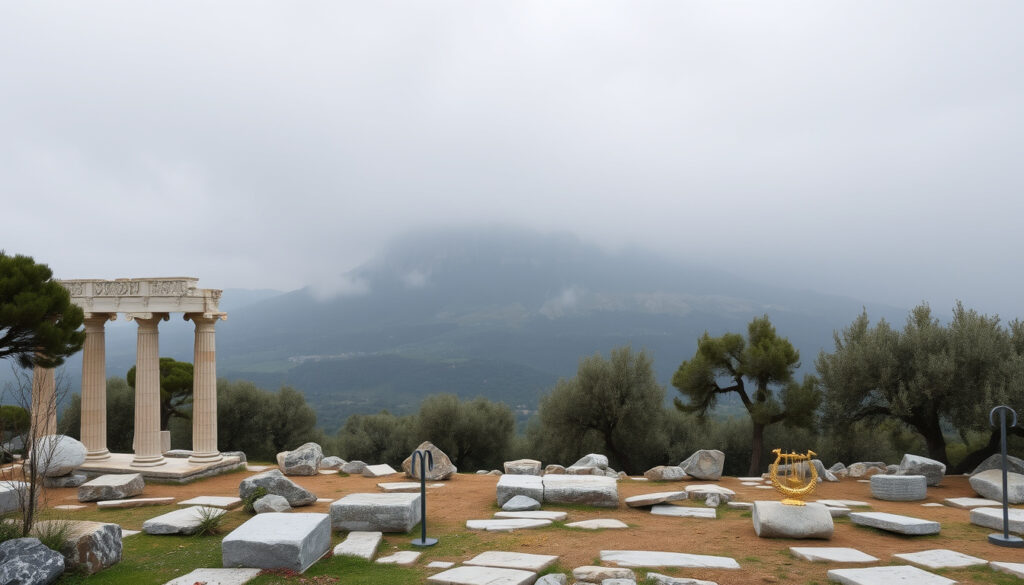
Greek Gods: Complete List, Powers, and Cultural History
Mention “Greek gods” and most people picture white marble statues on Mount Olympus. But behind the thunderbolts and togas lies a world of fluid gender roles, fierce political debates, and a slang word that still pops up on dating apps. This guide sorts the myths from the history, names the top gods, explores ancient same-sex relationships, and explains what “Greek god” actually means today — all with sources you can trust.
Number of Olympian gods: 12 ·
Supreme deity: Zeus ·
Sacred dwelling: Mount Olympus ·
Earliest literary sources: Hesiod’s Theogony, Homeric epics (8th century BCE)
Quick snapshot
- Zeus is the supreme god of the Greek pantheon (Encyclopaedia Britannica (reference work)).
- The Twelve Olympians are a primary group of gods (Encyclopaedia Britannica (reference work)).
- Ganymede was taken by Zeus to be his cupbearer (Encyclopaedia Britannica (reference work)).
- Athens practiced pederasty as a socially accepted institution (Encyclopaedia Britannica (reference work)).
- Exact number of Greek gods – ancient lists differ (e.g., 12, 15, 20). (London Metropolitan University Repository (academic research))
- Whether Zeus had other male lovers beyond Ganymede is debated by scholars. (London Metropolitan University Repository (academic research))
- The precise ancient term for ‘femboy’ varied by region and period; kinaidos is one term (London Metropolitan University Repository (academic research)).
- Worship of Greek gods: c. 1600 BCE – 400 CE.
- Major literary sources date from the 8th century BCE (Homer, Hesiod).
- Pagan practice suppressed after Emperor Theodosius I (c. 391 CE).
- Greek mythology continues to influence media, psychology (Narcissus complex), and casual language.
- Scholars increasingly examine gender diversity in ancient sources, moving beyond the canonical 12.
The table below summarizes the essential data about the Greek pantheon.
Key facts at a glance
| Label | Value |
|---|---|
| Pantheon size | 12 major Olympians, hundreds of minor gods and daemons |
| Primary sources | Hesiod’s Theogony, Homer’s Iliad and Odyssey |
| Time period of worship | c. 1600 BCE – 400 CE |
| Geographic center | Mount Olympus, Greece |
| Successor religion | Christianity after Emperor Theodosius I (c. 391 CE) |
Which are the 12 main Greek gods?
The most famous lineup is the Twelve Olympians. Six gods and six goddesses, each ruling a slice of the human and natural world. But the list wasn’t set in stone – ancient authors sometimes swapped Hestia for Dionysus. Here are the core members and their domains.
The Twelve Olympians and their domains
- Zeus – king, sky, thunder, justice (Encyclopaedia Britannica (reference work)).
- Hera – queen, marriage, family.
- Poseidon – sea, earthquakes, horses (Encyclopaedia Britannica (reference work)).
- Demeter – agriculture, grain, fertility (Encyclopaedia Britannica (reference work)).
- Athena – wisdom, war strategy, crafts (Encyclopaedia Britannica (reference work)).
- Apollo – prophecy, music, healing, later sun (Encyclopaedia Britannica (reference work)).
- Artemis – hunt, wild animals, later moon (Encyclopaedia Britannica (reference work)).
- Ares – war (Encyclopaedia Britannica (reference work)).
- Aphrodite – love, beauty (Encyclopaedia Britannica (reference work)).
- Hephaestus – fire, metalworking, craftsmanship (Encyclopaedia Britannica (reference work)).
- Hermes – messenger, travel, commerce (Encyclopaedia Britannica (reference work)).
- Hestia or Dionysus – hearth or wine, revelry (Encyclopaedia Britannica (reference work)).
Other major gods: Hades, Dionysus, and beyond
Hades rules the underworld but isn’t counted among the Olympians (Encyclopaedia Britannica (reference work)). Dionysus, though a late addition, earned his throne through cult popularity. Minor gods – like Eros, Hecate, and Nike – filled out the pantheon.
Why the number 12? Origins and variations. The number likely came from the 12 months or 12 signs of the zodiac. Lists in ancient sources vary – Encyclopaedia Britannica (reference work) notes that Hestia sometimes gave her seat to Dionysus. Some accounts name 15 or 20 major figures, but the Olympian dozen is the classic canon.
The “12 Olympians” is a modern shorthand, not a strict ancient census. For any student exploring Greek mythology, knowing that the list is flexible helps avoid treating a teaching tool as gospel.
Who is the most powerful Greek god?
In the ancient sources, one name stands above the rest. Zeus overthrew his father Cronus and the Titans to become the supreme ruler of gods and men.
Zeus: king of the gods, ruler of the sky
According to Encyclopaedia Britannica (reference work), Zeus controls the sky and thunder, and his symbols include the thunderbolt, eagle, and oak. He is described as the “father of gods and men” in Hesiod’s Theogony. No other god challenges his authority – not even Poseidon or Hades, who are strong in their own domains but ultimately answer to Zeus.
Other contenders: Poseidon, Hades, Athena
Poseidon can shake the earth, Hades commands the dead, and Athena is the strategic mastermind. Yet none overrules Zeus. Power in Greek mythology is measured by authority over domains, not raw strength. Encyclopaedia Britannica (reference work) confirms Poseidon’s role as “god of the sea,” but he is second in the divine hierarchy. Some modern fandom rankings (Reddit (fan discussion)) put Hades or Athena first, but those are not authoritative – ancient texts are clear: Zeus is the most powerful (Encyclopaedia Britannica (reference work)).
The pattern: Power in the Greek pantheon is about rule-making, not muscle-flexing. Zeus holds the ultimate veto, and that makes him the undisputed top god in the historical record.
Who is Zeus’ only male lover?
Greek myths record many affairs of Zeus, mostly with goddesses and mortal women. But one male lover stands out: Ganymede, a Trojan prince of stunning beauty.
The myth of Ganymede
The story goes that Zeus, enchanted by the youth, sent his eagle (or transformed himself into one) to snatch Ganymede from Mount Ida. He brought the prince to Olympus to serve as cupbearer to the gods. Encyclopaedia Britannica (reference work) calls Ganymede “the most beautiful of mortals” and notes that the abduction is Zeus’s only well-known male love affair.
Ganymede’s role as cupbearer
On Olympus, Ganymede poured nectar for the gods, a role that replaced Hebe, goddess of youth. The myth was popular in art and literature – Pindar’s Olympian Odes celebrates Ganymede as a beloved of Zeus (Pindar, Olympian Odes 1 (ancient Greek poetry, via Perseus Project)).
Homosexual themes in Greek mythology
Zeus and Ganymede is the most famous same-sex myth, but others exist – Apollo loved Hyacinthus, and Heracles had male companions. These stories reflect a culture where relationships between older and younger men were normalized, though not identical to modern homosexuality. Encyclopaedia Britannica (reference work) explains that ancient Greek sexuality operated on age and status lines rather than orientation categories.
The implication: Zeus’s relationship with Ganymede is the clearest mythological evidence of same-sex desire among the gods, and it set a divine precedent for the pederastic practices in Classical Athens.
What were femboys called in ancient Greece?
This question touches on gender expression, not just sexuality. Ancient Greek had a term that roughly described effeminate men.
Terminology: kinaidos, effeminacy
The word kinaidos (κίναιδος) referred to a man who took a passive role in same-sex relations or who exhibited feminine traits. According to research from London Metropolitan University Repository (academic research), the term carried social stigma in some periods. It was not exactly “femboy” as used today – the modern identity includes voluntary aesthetic choices, while kinaidos was often an insult.
Social attitudes toward gender expression
In Classical Athens, a male citizen was expected to be the active partner; being passive could damage his reputation. Yet myths and art show a spectrum: Dionysus is often depicted with androgynous features, and Hermaphroditus (son of Hermes and Aphrodite) embodies both sexes. Santa Clara University Scholar Commons (historical analysis) notes that gender expression was tied to social status and citizenship, not just personal identity.
Artistic depictions of androgynous figures
Vase paintings show men in flowing robes, dancing in ways later described as effeminate. The boundary between male and female was more fluid in art than in law. The kinaidos was one point on a spectrum, not a fixed category.
The catch: No single ancient term maps neatly onto “femboy.” Kinaidos comes closest, but it was a slur, not an identity – a caution for anyone trying to project modern labels onto the past.
Was homosexuality accepted in Athens?
Yes, but with rules. The most documented form was pederasty – a structured relationship between an adult male (erastes) and an adolescent boy (eromenos).
Pederasty in Classical Athens
These relationships were socially accepted and often involved mentoring, education, and erotic bonds. Encyclopaedia Britannica (reference work) describes Athenian pederasty as age-structured and tied to civic education. Xenophon’s Symposium portrays men discussing love for boys as a normal part of life (Xenophon, Symposium (ancient Greek philosophical dialogue, via Perseus Project)).
Legal and social norms
Not all same-sex behavior was tolerated. Free adult males who took the passive role could face ridicule or loss of citizen rights. The focus was on age and role, not orientation. Santa Clara University Scholar Commons (historical analysis) notes that Athenian law did not prohibit pederasty but regulated access to gymnasia and schooling.
Comparison to other city-states (Thebes, Sparta)
Thebes had a famous “Sacred Band” of paired male lovers, considered elite warriors. Sparta also accepted same-sex bonds among soldiers. Athens was more restrictive about public display but still institutionalized the practice.
The pattern: Acceptance depended on who you were and whom you loved. An adult citizen courting a youth was normal; a grown man playing the “woman’s part” was not. Modern categories miss these nuances.
For modern readers, ancient Greek homosexuality can look either progressive or oppressive. It was neither by today’s standards – but understanding its structure helps clarify why terms like “Greek god” carry a double meaning today.
What are the powers of the Greek gods?
Each Olympian had a distinct domain and symbols. Some powers overlapped, but immortality, shape-shifting, and influence over human fate were universal.
Six gods, one pattern: domain-based authority with clear symbols.
| God | Domain | Symbol |
|---|---|---|
| Zeus | Sky, thunder, justice | Thunderbolt, eagle, oak |
| Poseidon | Sea, earthquakes, horses | Trident, horse |
| Hades | Underworld, the dead | Cerberus, scepter, cornucopia |
| Athena | Wisdom, war strategy, crafts | Owl, olive tree, aegis |
| Ares | War, violence | Spear, helmet, dog |
| Aphrodite | Love, beauty | Dove, mirror, myrtle |
Major powers per Olympian
- Zeus – controls weather, throws lightning, transforms at will.
- Poseidon – causes earthquakes, creates storms, tames horses.
- Athena – grants wisdom, protects cities, invents crafts.
- Apollo – prophesies, heals, inspires music.
- Artemis – hunts, controls wild animals, brings sudden death.
These powers come from Greek mythology sources such as Encyclopaedia Britannica (reference work) and National Geographic Kids (educational resource).
Shared abilities
All gods are immortal – they cannot die by natural causes, though they can be wounded (as Diomedes wounded Ares). They can shape-shift (Zeus became a bull, a swan, etc.) and move between realms.
Symbols representing each god’s power
Ancient Greeks recognized gods by their attributes. The thunderbolt meant Zeus’s authority; the trident signaled Poseidon’s control of the sea. Greek TravelTellers (travel and culture site) explains that these symbols help modern visitors identify statues and temples.
What this means: The gods’ powers are not just combat abilities – they are metaphors for the forces that shaped ancient life: storms, crops, war, wisdom. Understanding the system of symbols helps decode Greek art and literature.
Clarity section: confirmed and uncertain
Confirmed facts
- Zeus is the supreme god of the Greek pantheon.
- The Twelve Olympians are a primary group of gods.
- Ganymede was taken by Zeus to be his cupbearer.
- Athens practiced pederasty as a socially accepted institution.
What’s unclear
- Exact number of Greek gods – ancient lists differ (e.g., 12, 15, 20).
- Whether Zeus had other male lovers beyond Ganymede is debated.
- The precise ancient term for ‘femboy’ varied by region and period; kinaidos is one term.
Quotes from ancient and modern sources
“Zeus, the king of the gods, controls the sky and thunder and is associated with kingship over all other gods.”
– Encyclopaedia Britannica (reference work)
“The gods who are called Olympians are twelve in number, but the list varies among ancient authors.”
– Encyclopaedia Britannica (reference work)
“Ganymede, the most beautiful of mortals, was carried off by the gods to be Zeus’s cupbearer.”
“In Athens, the erastes-eromenos relationship was part of the education system, though it carried social rules about discretion.”
– Encyclopaedia Britannica (reference work)
Summary: the modern echo of Greek gods
Greek mythology is not a dusty museum piece. It lives in language (“Herculean effort,” “Pandora’s box”), in psychology (the Oedipus complex, Narcissus), and in the casual compliment “You look like a Greek god.” For a reader navigating modern culture, understanding the original gods – and the complex society that worshipped them – means seeing that ancient Greeks debated gender, power, and desire just as we do. For anyone looking up Greek gods today, the payoff is clear: you’ll never hear “Zeus” the same way again.
kidslovegreece.com, en.wikipedia.org, youtube.com, youtube.com, reddit.com, staragents.com, greek-gods-heroes-and-monsters.fandom.com
For a concise yet thorough overview, the comprehensive guide to Greek gods explores the Olympian pantheon with clear family ties and key myths.
Frequently asked questions
What is the difference between a god and a titan?
Titans were the generation of deities before the Olympians, led by Cronus. The Olympians, led by Zeus, defeated the Titans in a ten-year war (Titanomachy) and imprisoned them in Tartarus. Gods are the ruling generation; titans are their predecessors.
Did the Greek gods have children with mortals?
Yes. Zeus, Poseidon, Apollo, and others fathered many demigods (half-human, half-divine) such as Heracles, Perseus, and Achilles. These offspring often became heroes in Greek myths.
Which Greek god is the god of war?
Ares is the god of war, representing violence and bloodshed. His Roman counterpart is Mars. Athena also had a war aspect, but she represented strategy and just warfare.
What happened to the Greek gods after the rise of Rome?
The Romans adopted many Greek gods, giving them Latin names (Zeus became Jupiter, Hera became Juno). Worship continued throughout the Roman Empire until Christianity became the state religion under Theodosius I (c. 391 CE), which led to the closing of pagan temples.
Is Zeus the father of all gods?
Zeus is the king of the gods, but not the father of all. He is the son of the Titans Cronus and Rhea. Many gods are his children (Apollo, Artemis, Athena, Ares, etc.), but older deities like Hades and Poseidon are his brothers, not his offspring.
What is the modern meaning of ‘Greek god’ in slang?
Today, calling someone a “Greek god” is a compliment meaning they are extremely attractive, often with a muscular, classical physique. The phrase plays on the idealized statues of gods like Zeus and Apollo.
How many generations of gods are there in Greek mythology?
Three main generations: the primordial deities (Chaos, Gaia, Tartarus), the Titans (Cronus, Rhea, Oceanus), and the Olympians (Zeus, Hera, etc.). Some lists include a fourth generation of demigods.
Related reading
- Star of the Sea: Meaning, Novel, Cruise Ship & Schools Explained – explores symbolic and mythological meanings in cultural storytelling.
- Proverbs 3:5‑6 Meaning: Trust in the Lord Completely – touches on religious narrative and ancient symbolic frameworks comparable to myth.
More related posts
 Kylie Kelce: Biography, Health, Career, and Key Facts
 60 Euros to CAD: Live Exchange Rates from Wise, XE, Revolut
 Tren Twins: Real Names, Age, Height, Net Worth, and Facts
 Arber Xhekaj: Why They Call Him WiFi and The Sheriff
 Cream of Broccoli Soup Recipe: Best Homemade Guide
 Kerri Einarson: Career, Team Changes & Injury Explained
 Simone Biles: Height, Medals, ADHD, and Personal Life
 Redmi Note 9 Pro 5G to Buy – India Availability Prices Guide
