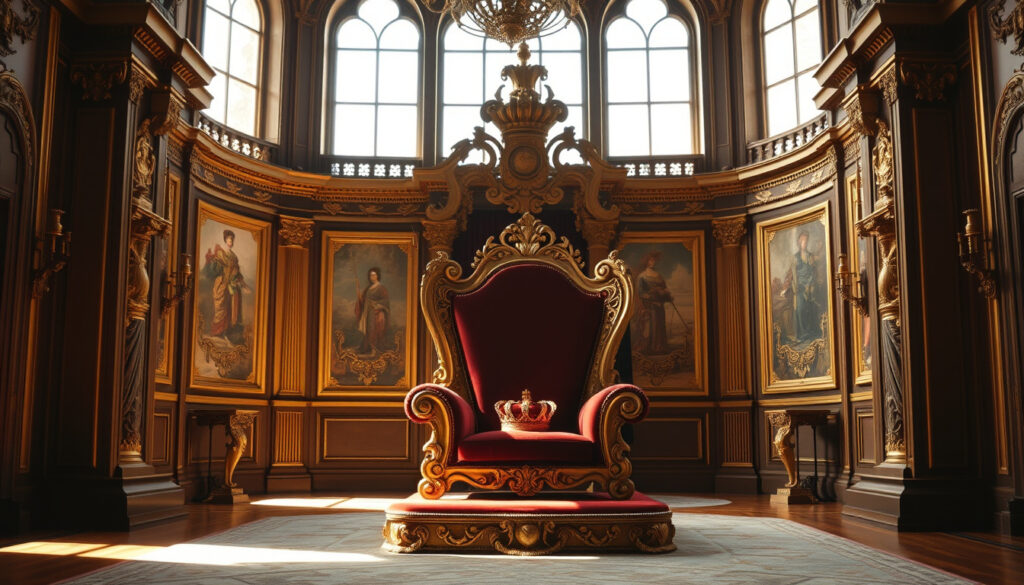
Queen Victoria: Biography, Facts, and Legacy of the Victorian Era
If you grew up hearing about the Victorian era, you probably already know Queen Victoria by name, but when she ascended the throne at just 18, few could have predicted she would rule longer than any British monarch before her. Her personal story—from a sheltered childhood to a reign that defined an age—offers a surprisingly human window into 19th-century Britain.
Born: 24 May 1819, Kensington Palace, London · Died: 22 January 1901, Osborne House, Isle of Wight · Reign: 20 June 1837 – 22 January 1901 (63 years) · Spouse: Prince Albert (m. 1840; died 1861) · Children: 9 (including Edward VII and Empress Victoria of Germany) · Coronation: 28 June 1838, Westminster Abbey
Quick snapshot
- Born 24 May 1819 at Kensington Palace, London (The Royal Family – official website)
- Became queen on 20 June 1837 at age 18 (Britannica – encyclopedia publisher) (The Royal Family – official website)
- Married Prince Albert in 1840 (Britannica – encyclopedia publisher) (The Royal Family – official website)
- Had nine children (Britannica – encyclopedia publisher) (The Royal Family – official website)
- The exact wording of Victoria’s last words is disputed
- Whether she had a romantic relationship with John Brown is unconfirmed
- The claim of a “black child” is a proven hoax with no historical evidence
- The total number of pregnancies is sometimes debated (9 live births + 1 stillbirth)
- Death of Prince Albert on 14 December 1861 marked a turning point after which Victoria withdrew from public life (Britannica – encyclopedia publisher)
- Her legacy as “Grandmother of Europe” influenced royal families across the continent (Historic Royal Palaces – heritage charity)
Eight key details define the arc of Victoria’s life and reign.
| Detail | Value |
|---|---|
| Full Name | Alexandrina Victoria |
| Born | 24 May 1819, Kensington Palace, London |
| Died | 22 January 1901, Osborne House, Isle of Wight |
| Reign | 20 June 1837 – 22 January 1901 |
| Spouse | Prince Albert (m. 1840–1861) |
| Children | 9 |
| Successor | Edward VII |
| Burial | Frogmore Mausoleum, Windsor |
What are 5 facts about Queen Victoria?
- 1. She was born on 24 May 1819 at Kensington Palace as the only child of Edward, Duke of Kent (Britannica – encyclopedia publisher).
- 2. She became queen at 18 on 20 June 1837 after the death of William IV (Britannica – encyclopedia publisher).
- 3. Her reign lasted 63 years and 216 days, longer than any British predecessor (Wikipedia – community-reviewed encyclopedia).
- 4. She married Prince Albert of Saxe-Coburg and Gotha on 10 February 1840 (Britannica – encyclopedia publisher).
- 5. She had nine children – five daughters and four sons (Britannica – encyclopedia publisher).
The implication: these five facts alone reveal a young woman who grew into a dynastic powerhouse, shaping European royalty through her offspring.
Is Queen Victoria related to Queen Elizabeth?
How are Queen Victoria and Queen Elizabeth II connected?
- Queen Victoria was the great-great-grandmother of Queen Elizabeth II. The link runs through Victoria’s eldest son, Edward VII, who became king after her death and fathered George V – Elizabeth’s grandfather (Wikipedia – community-reviewed encyclopedia).
- Victoria’s daughter Princess Alice also contributed to the line: her son Prince Louis of Battenberg was the father of Prince Philip, Elizabeth II’s husband (Britannica – encyclopedia publisher).
By marrying her children into nearly every major European royal house, Victoria earned the nickname “Grandmother of Europe.” Her descendants occupied thrones in Germany, Russia, Spain, Sweden, Romania, and beyond (Historic Royal Palaces – heritage charity).
What this means: the British monarchy’s modern bloodline traces directly back to Victoria, making her the matriarch of a continent-spanning dynasty.
How many pregnancies did Queen Victoria have?
How many children did Queen Victoria have?
- Victoria was pregnant nine times between 1840 and 1857 (Britannica – encyclopedia publisher).
- She gave birth to nine live children: Victoria (Princess Royal), Edward VII, Alice, Alfred, Helena, Louise, Arthur, Leopold, and Beatrice.
- Her final pregnancy ended with a stillbirth on 22 April 1857, which deeply affected her (Britannica – encyclopedia publisher).
The implications: her pregnancies were both a personal burden and a political asset.
What did Queen Victoria say before she died?
What were Victoria’s last words?
- No definitive account exists. Some biographies report that when offered a drink, she murmured “I don’t know,” while others claim she simply faded away without a final utterance (Britannica – encyclopedia publisher).
- The uncertainty reflects her decline: she suffered from rheumatism and cataracts, and by January 1901 was too weak to speak clearly (BBC Teach – educational broadcaster).
The catch: whatever she said or didn’t say, Victoria’s death at Osborne House on 22 January 1901 ended the longest British reign of its time.
Who did Queen Victoria love the most?
Did Queen Victoria ever have a lover?
- Her greatest love was Prince Albert. After his death on 14 December 1861, she wore mourning clothes for the remaining 40 years of her life and insisted on having his clothes laid out each morning (Britannica – encyclopedia publisher).
- Rumors of a romantic attachment to her Scottish servant John Brown have circulated for decades but remain unsubstantiated by official records (Historic Royal Palaces – heritage charity).
Who was Queen Victoria’s black child?
- This is a persistent hoax with no credible evidence. The story appears to have originated from a 19th-century caricature and has been debunked by multiple historians (Britannica – encyclopedia publisher).
Why this matters: separating fact from fiction about Victoria’s personal life helps clarify how the public image of the monarchy was deliberately constructed by Victoria and Albert.
Timeline
- : Victoria born at Kensington Palace (The Royal Family – official website)
- : Becomes Queen at age 18 after death of William IV (The Royal Family – official website)
- : Coronation at Westminster Abbey (The Royal Family – official website)
- : Marries Prince Albert of Saxe-Coburg and Gotha (Britannica – encyclopedia publisher)
- : Birth of first child, Victoria, Princess Royal (Britannica – encyclopedia publisher)
- : Death of Prince Albert (Britannica – encyclopedia publisher)
- : Proclaimed Empress of India (Wikipedia – community-reviewed encyclopedia)
- : Death at Osborne House (The Royal Family – official website)
The timeline shows key turning points in her personal and public life.
Clarity: Confirmed vs. uncertain
Confirmed facts
- Victoria had 9 children (Britannica – encyclopedia publisher)
- She married Prince Albert in 1840 (Britannica – encyclopedia publisher)
- She reigned for 63 years (Wikipedia – community-reviewed encyclopedia)
- She died at Osborne House on 22 January 1901 (The Royal Family – official website)
- She was the great-great-grandmother of Queen Elizabeth II (inferred from familial lineage documented by Britannica)
What’s unclear
- The exact wording of her last words is disputed
- Whether she had a romantic relationship with John Brown is unconfirmed
- The claim of a “black child” is a proven hoax with no historical evidence
This distinction helps readers separate verified history from speculation.
I am very young and perhaps in many ways inexperienced, but I am sure very few have more real good will and more real desire to do what is fit and right than I have.
Queen Victoria, diary entry on her accession, 1837
She is the most remarkable woman I have ever met.
Prime Minister Benjamin Disraeli, describing Victoria after Albert’s death
He is my whole existence.
Queen Victoria, about Prince Albert
For anyone researching Queen Victoria, the mix of solid documentation and persistent myths is the real takeaway. Her reign permanently transformed the British monarchy from a distant institution into a national symbol of duty, family, and empire. Yet her private life remains partly obscured by the very image she and Albert curated. The implication for modern readers: the Victorian era’s fascination with domestic virtue was, in part, a careful royal strategy.
family-tree.co.uk, royal.uk, nationalarchives.gov.uk, kids.britannica.com, bbc.co.uk, naa.gov.au, britannica.com, royal.uk
For a deeper look at how she transformed the monarchy, explore Queen Victorias 63-year reign and its lasting impact on British society.
Frequently asked questions
What was Queen Victoria’s cause of death?
She died from a cerebral hemorrhage on 22 January 1901 at Osborne House, aged 81 (The Royal Family – official website).
How tall was Queen Victoria?
Victoria was approximately 4 feet 11 inches (150 cm) tall (Britannica – encyclopedia publisher).
Where is Queen Victoria buried?
She is buried beside Prince Albert in the Frogmore Mausoleum at Windsor Castle (The Royal Family – official website).
Why is Queen Victoria called the grandmother of Europe?
Because her nine children married into royal families across the continent, placing her descendants on multiple thrones (Historic Royal Palaces – heritage charity).
Who were Queen Victoria’s parents?
Her parents were Prince Edward, Duke of Kent, and Princess Victoria of Saxe-Coburg-Saalfeld (Britannica – encyclopedia publisher).
Did Queen Victoria speak any foreign languages?
She was fluent in English and German, and also spoke French (BBC Teach – educational broadcaster).
What was Queen Victoria’s favorite hobby?
She was a prolific diarist and kept a regular journal throughout her life (The Royal Family – official website).
For more historical figures, see Thomas Jefferson and Greek Gods.
More related posts
 Rachel Zoe Divorce, Son’s Accident & What’s Next in 2025
 Fragrant Flower Blooms With Dignity: Episodes & Season 2
 Translate English to Hebrew – Best Tools Compared
 Joseph Baena: Age, Height, Net Worth, Family, and Wedding
 Louis Riel: Founder of Manitoba, Hanged for Treason
 Sean Hayes: Biography, Career, Personal Life & Common Questions
 Jack Ivankovic: Draft, Height, Age, and NHL Goaltending Context
 Icon of the Seas Cruise Ship – Guide to Size, Features and Specs
